After the final lesson
Thank you all for taking this course, it’s been a real pleasure!
The notes from the final lesson are here: Notes from Lesson 8 (13/10/26) | Sarah’s Blog
If you are interested in how the BBC covered Sweden’s switch to driving to the right back in 1967 you can watch it on Instagram reels here: Instagram It’s available on BBC archive, but without English subtitles: BBC Archive 1967: Sweden Drives on the Right – BBC
A reminder that there is a new course starting on Tuesday 3rd November if you would like to join us. You can register here: English Conversation B2/C1 – Folkuniversitetet Hope to see you again in November!
Homework from Lesson 7
Here are the lesson notes: Notes from Lesson 7 (6/10/26) | Sarah’s Blog
Vocabulary: If you have the self-study book, the relevant unit for travel and transport is Unit 31
Please read this article before the next lesson : ‘The violence is off the scale’: staff and passengers at risk as assaults on trains in Great Britain soar to record high | Public transport | The Guardian
After you have read the article please check you understand the meaning of the vocabulary below and consider the questions that follow. You can relate this to Stockholm and/or other cities:
- harassment –
- dwindle –
- body cam –
- intervene –
- bystander –
- packed / crammed –
- shaken –
- offender / assailant –
- What are your general reactions to the article, and what does it suggest about everyday life in public spaces?
- What would make people feel more comfortable and confident using public transport?
- What small changes could make trains and stations feel friendlier, safer, and more welcoming?
- What can passengers, staff, and the community do together to create a safer atmosphere?
- Have you had any positive experiences on public transport that show people can also be helpful and considerate?
- What does a really good public transport system look like to you—not just in terms of safety, but also comfort and efficiency?
- If you were to write a code of conduct for using public transport, what would you include?
Lesson 6
Please read through the lesson notes: Notes from Lesson 6 (30/9/26) | Sarah’s Blog
Vätskersättning seems to be rehydration or electrolytes, but nothing seems so simple in the UK. I searched on Boots’ (one of the biggest chemist chains) for rehydration and found an eye-watering choice 🙂 Search for rehydration | BOOTS
Next week the topic will be travel and transport, and I handed out the questions in the lesson if you wish to read through them in advance. You can find them here: travel and transport
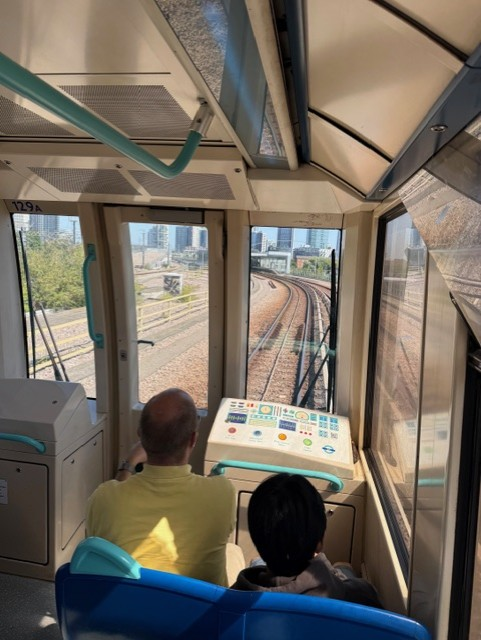
Where is this photo taken do you think?
Please choose an article from Six-minute English or a presentation from TED talks on a topic of your choice to discuss in groups next week:
Lesson 5
Here are the notes from the last lesson: Notes from Lesson 5 (22/9/26) | Sarah’s Blog
Here are the questions I handed out in the lesson to talk about on Tuesday: Talking about food and alcohol
Please watch the following TED talk: Here’s Why You’re Addicted to Ultra-Processed Food | Chris van Tulleken | TEDxNewcastle
Here are some questions to consider:
- What did you think of the talk?
- Was there anything that genuinely surprised you?
- Did he change the way you think about any foods you eat regularly?
- What do you think makes certain foods so hard to resist?
- How much responsibility should we take for our own eating habits?
- Is it really fair to blame people for their eating habits if companies are deliberately designing food to be irresistible?
- Do food companies have a responsibility to stop people over-consuming their products?
- Do you think knowing that something is unhealthy actually changes people’s behaviour? Why / why not?
- If you could change one thing about the way food is produced, sold or advertised, what would it be?
- After watching this, do you think you’ll change anything about the way you eat?
If you would like to know more about the van Tulleken twins (Chris and Xand) you can read about them here. They’ve become quite a household name in the UK and are really skilled presenters for both children and adults alike: Who Are The Van Tulleken Twin Doctors?
Lesson 4
Here are the notes from the last lesson: Notes from Lesson 4 (15/9/26) | Sarah’s Blog
Here is the website I talked about in the lesson where you can test yourself on vocabulary and grammar at whichever level you choose: Test your English – Every level and every skill
Please read one or other or both of these articles regarding Sweden and the EU and divided opinions on “snus” (nicotine pouches)
EU delays key tobacco tax vote until after Swedish election – POLITICO
EU delays key tobacco tax vote until after Swedish election | Obiaks
Please consider these questions:
- What are these articles about?
- Why do you think the EU decided to wait before voting?
- “Stockholm has emerged as the main holdout against the Commission’s proposal to raise levies on cigarettes, vapes and other nicotine products.” – Why is this?
- In general, do higher prices stop people from buying unhealthy products? Do you think people listen more to health advice or to prices?
- Are snus and vaping good alternatives to smoking?
- How have attitudes to smoking and use of tobacco products and vaping changed in different generations do you think?
Lesson 3
- Please read through the notes from the last lesson: Notes from Lesson 3 (9/9/26) | Sarah’s Blog
- Do something fun and/or different this week. Take a photo and show your partner and talk about which you did.
- Choose an article that interests you from BBC Learning English – 6 Minute English and present it in pairs/small groups next lesson.
- If you are interested you can watch this short video with Rowan Atkinson talking about some of his most iconic characters including Mr Bean and Blackadder: Rowan Atkinson Breaks Down His Most Iconic Characters
- Questions to consider: Have you watched any of the series/films he talks about? Are you generally a fan of his comedy or other British comedy? Is there anything from the interview that surprises you or makes you think? Talk about a well-known and popular comedy from your country and that you enjoy (or don’t!)
Lesson 2
Please read through the notes from the lesson yesterday. You can find them here: Notes from Lesson 2 (1/9/26) | Sarah’s Blog
Preparation for next week – please read the two handouts I gave out in class yesterday and you can prepare the vocabulary if you wish
We started talking about social media in class, so we can continue next week. If you have the book and wish to study the vocabulary, it’s unit 36.
Please watch this TED talk (and any other talk that interests you) and we can talk about it in class next week:Why a social media ban won’t save teens
Lesson 1
Please read through the notes from the lesson yesterday. You can find them here: Lesson notes from Lesson 1 | Sarah’s Blog
Next week: The best things about the Swedish winter are…
Speaking preparation for next week: Visit https://englishnewsinlevels.com/ and choose an item of news that interests you, and try out the three different levels. You can talk about it in groups next lesson.
Questions to consider: Why did you choose that particular piece of news, what was interesting and informative about it, and did you pick up any new vocabulary? What is your opinion of this website?
Vocabulary study Here is the link to the Cambridge dictionary if you need to check the meaning and/or pronunciation of any new words:Cambridge Dictionary | English Dictionary, Translations & Thesaurus

Hello everyone and welcome to the course! My name is Sarah, and I am delighted to be your teacher for the upcoming English conversation course starting on Tuesday, 25th August.
The scheduled dates for the course are: 25/8, 1/9, 8/9, 15/9, 22/9, 29/9, 6/10 and 13/10. Our lessons begin at 18.00 in room 532. Please check your email or course notification for the door code to the building.
Please visit this blog page regularly to find homework assignments, suggestions for self-study and any lesson notes I share.
To support your course, I recommend buying this book – click here: English Vocabulary in Use upper-intermediate fourth edition This would be used for self-study at home working through the topics we discuss in the course. You can buy this via www.bokus.com or at Ferdosi Bookshop at Drottninggatan 87 in Stockholm.
First Lesson Preparation:
Please come ready to introduce yourself and share a bit about your experience with English. Remember, this is a communicative course, and the focus is on building your confidence and fluency. Don’t worry about making mistakes or not being able to find the exact words you need at times —everyone is here to improve, and you will expand your range of vocabulary throughout the course.
Discussion questions for the first lesson
Choose the ones that interest you.
- How long have you been learning English, and what has helped you reach your current level?
- In what situations do you feel most (or least) comfortable speaking English? Why?
- What do you enjoy most about being able to communicate in English?
- What motivated you to join this course at this point in your life?
- How has English influenced your personal or professional life?
- Have you ever lived, worked, or travelled in an English-speaking country? What was memorable about that experience?
- Is there an English-speaking country you dream of visiting in the future?
- Do you have a favourite English word, idiom, or saying?
- Do you use a website or app to help you practise English that you could recommend to the group?
- Are there any films, series or books that you could recommend to the group?
- What aspects of learning English do you find most challenging? How do you try to overcome these difficulties?
- What are your specific goals for this course, and how can I best support you in achieving them?
- If you have taken a course with me before, what activities or topics did you find most useful? Are there new areas you’d like us to explore this time?